Plastic Four Finger Bag
-
Product features and functions
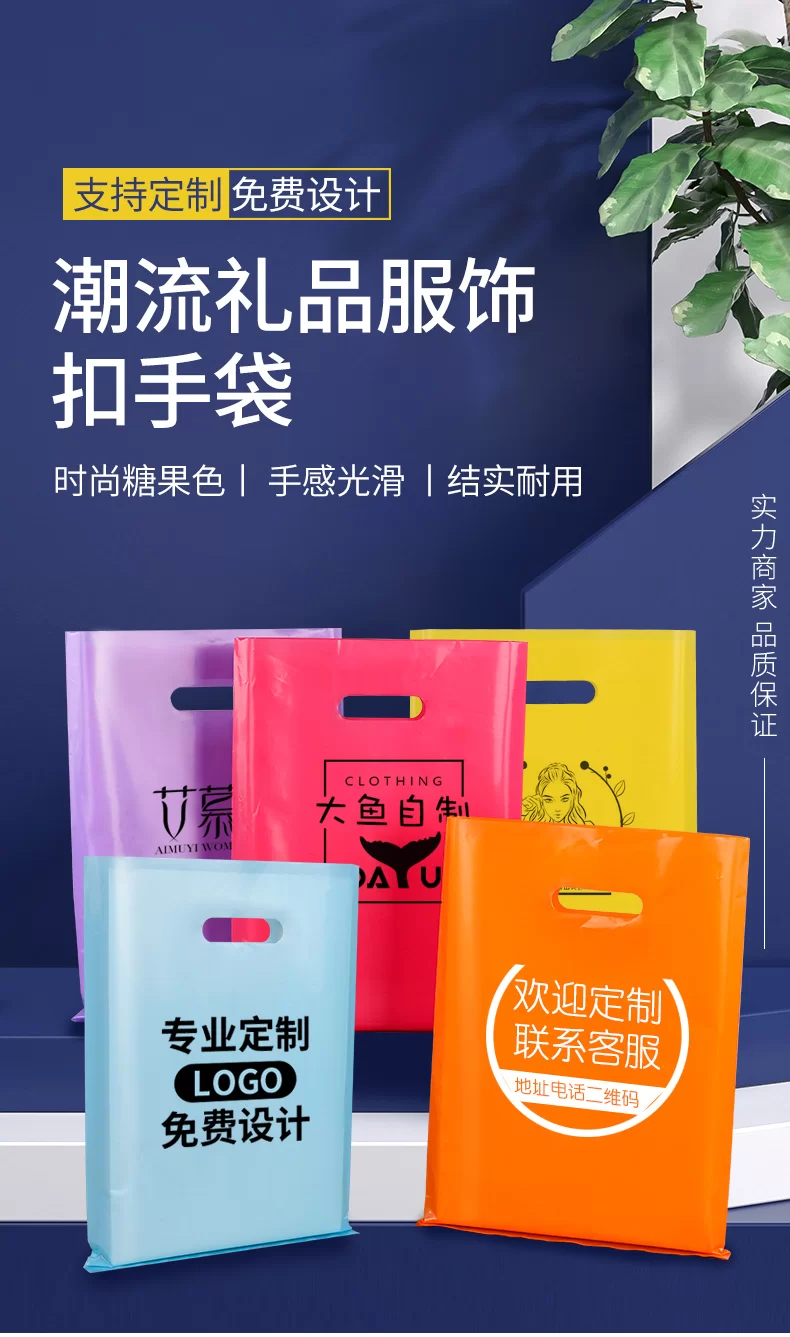
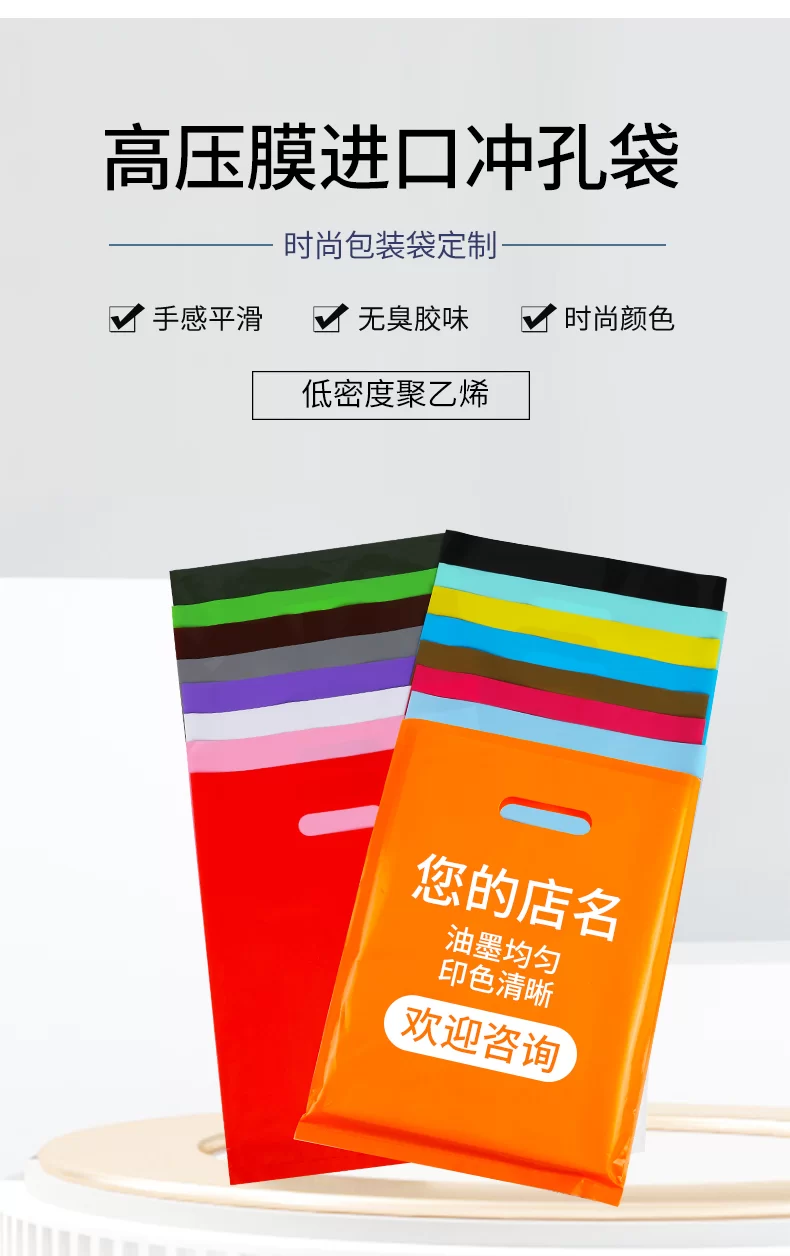
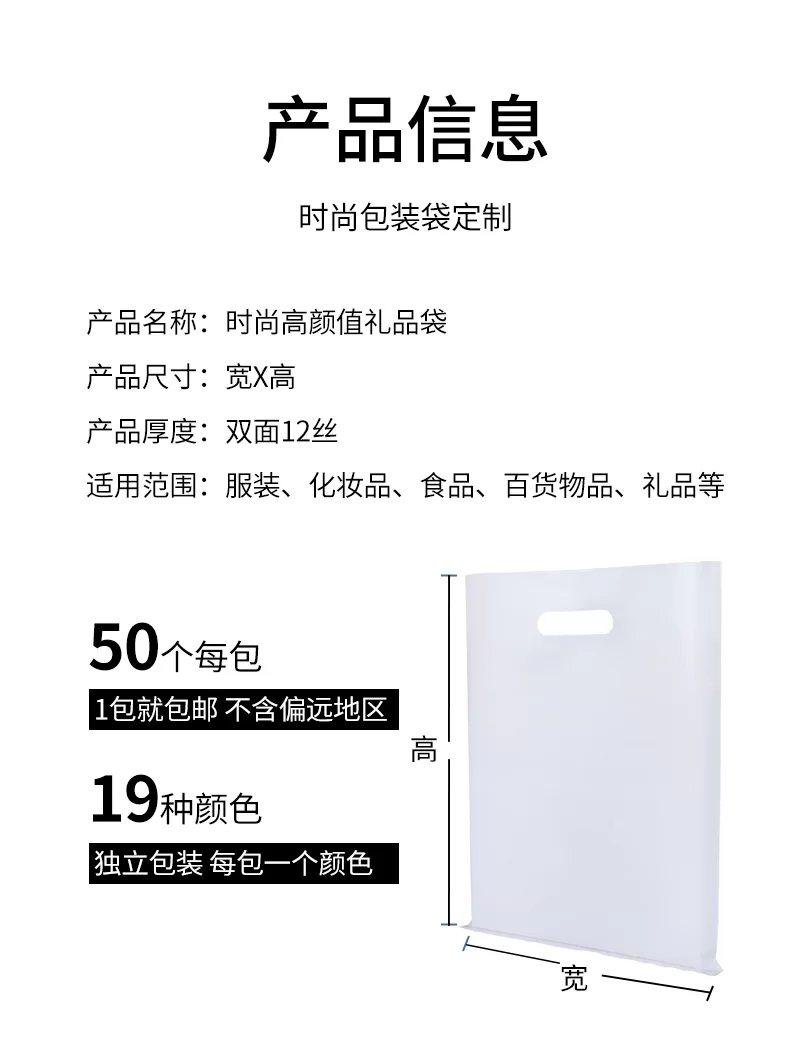
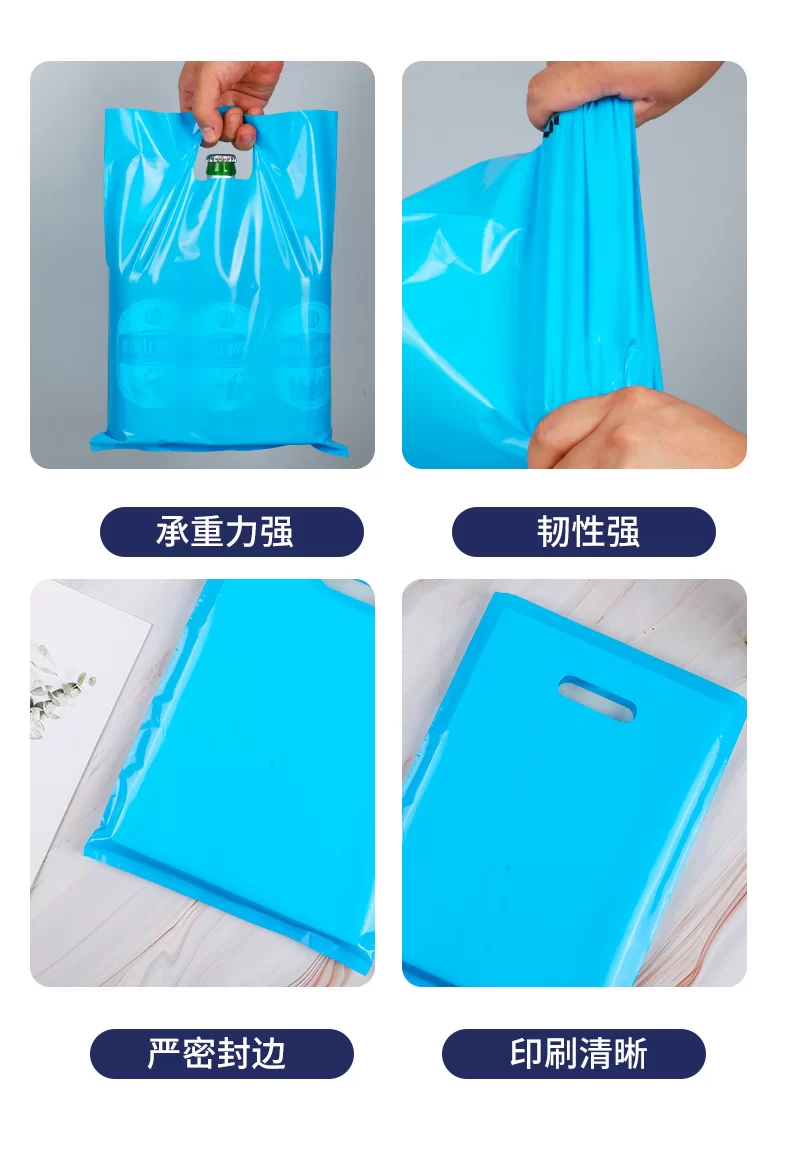
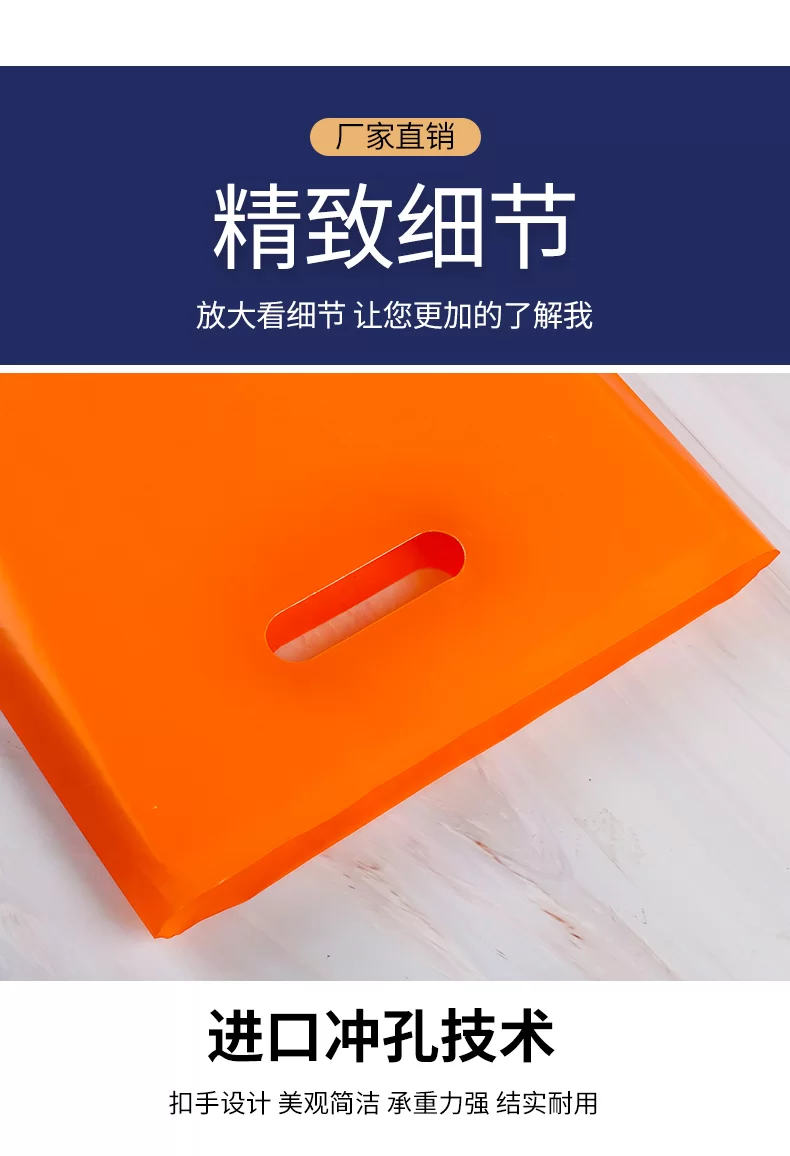
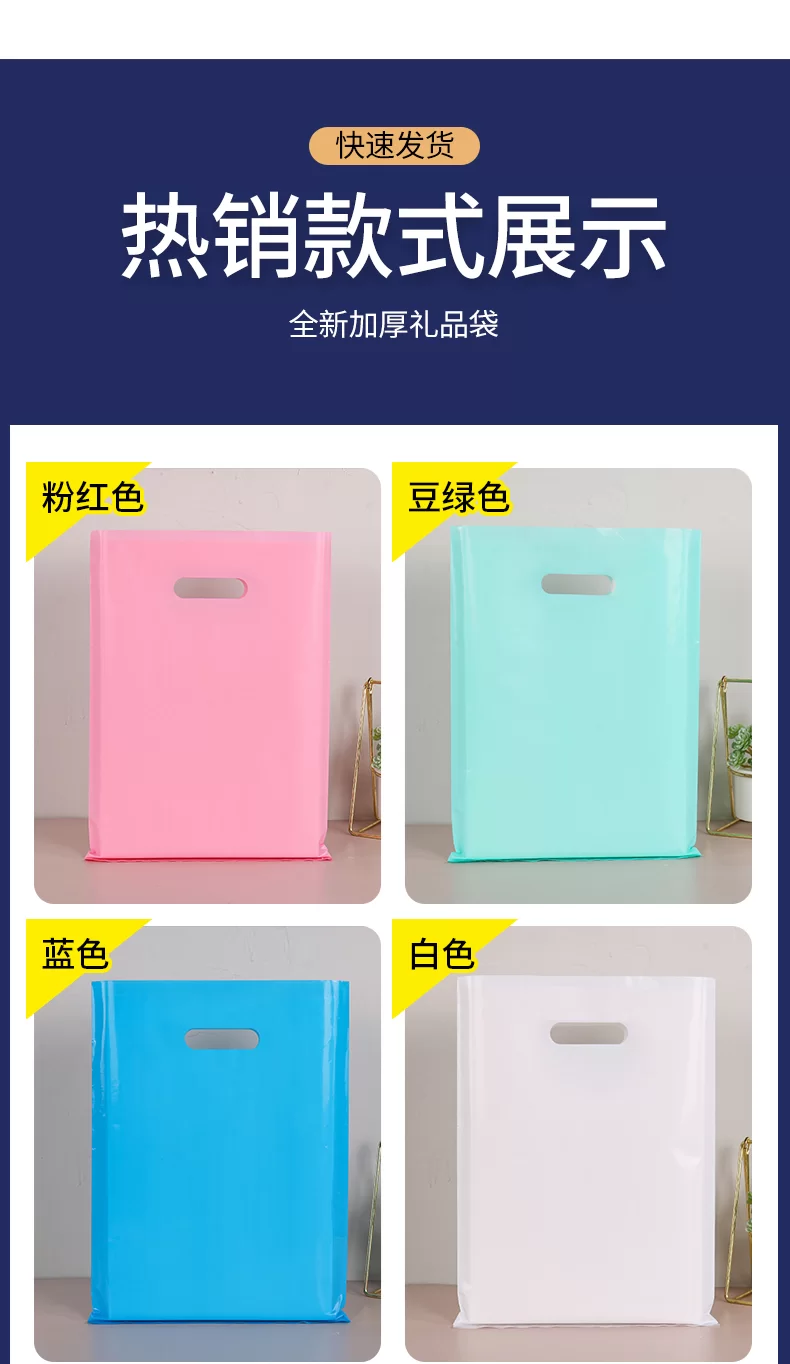
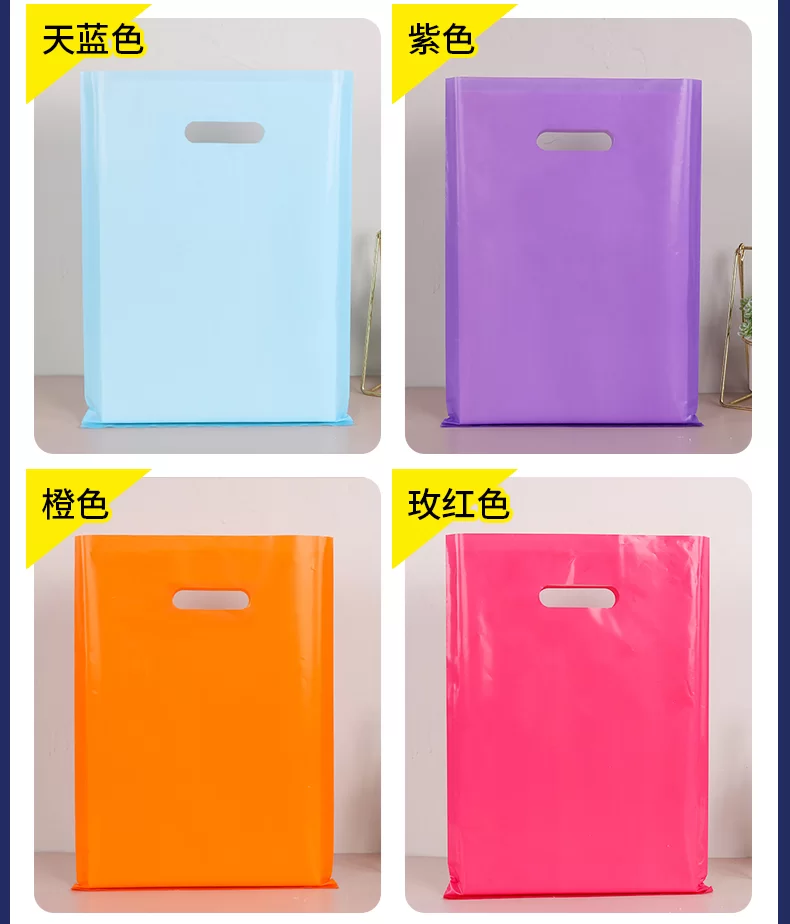
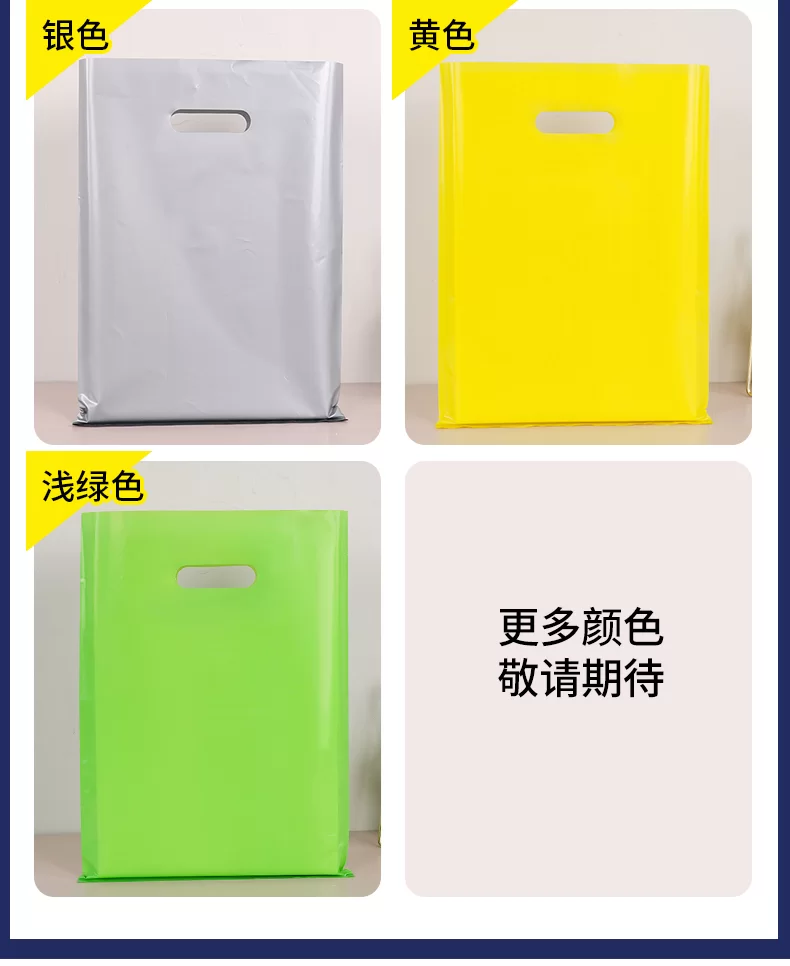
1. Buckle design, comfortable and not tiring: The top adopts hot cutting integrated molding or imported stamping technology to form a round and burr free buckle hole, with uniform force distribution, no pinching, and a single hand grip for more comfortable and stable load-bearing.
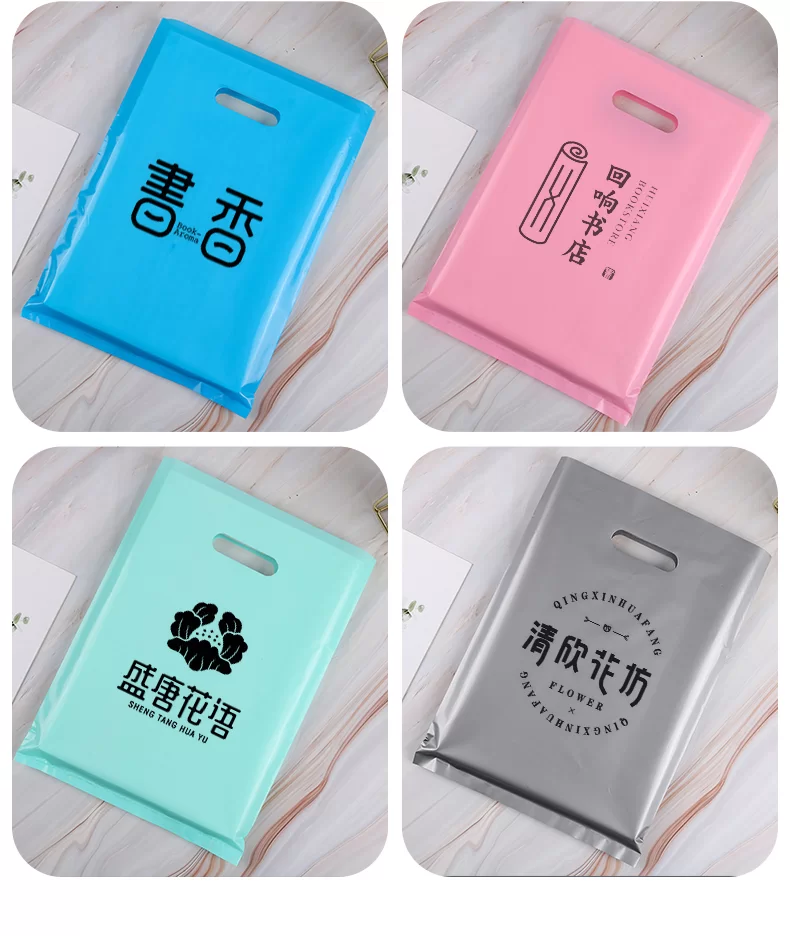
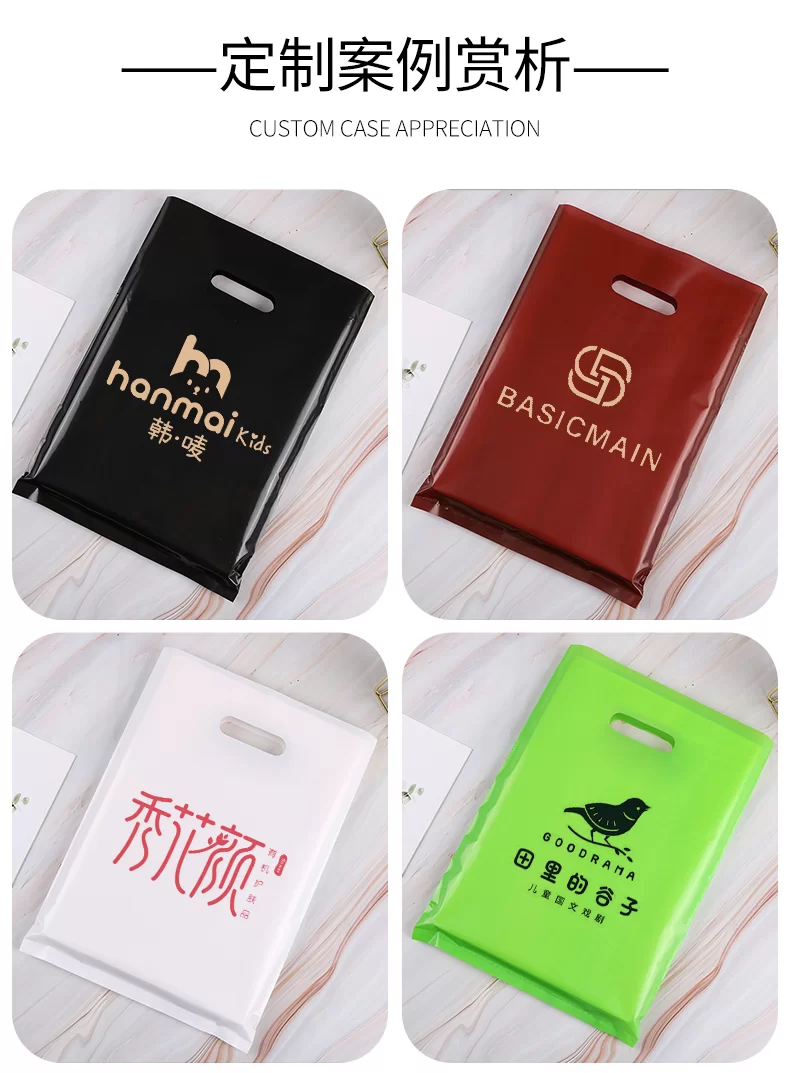
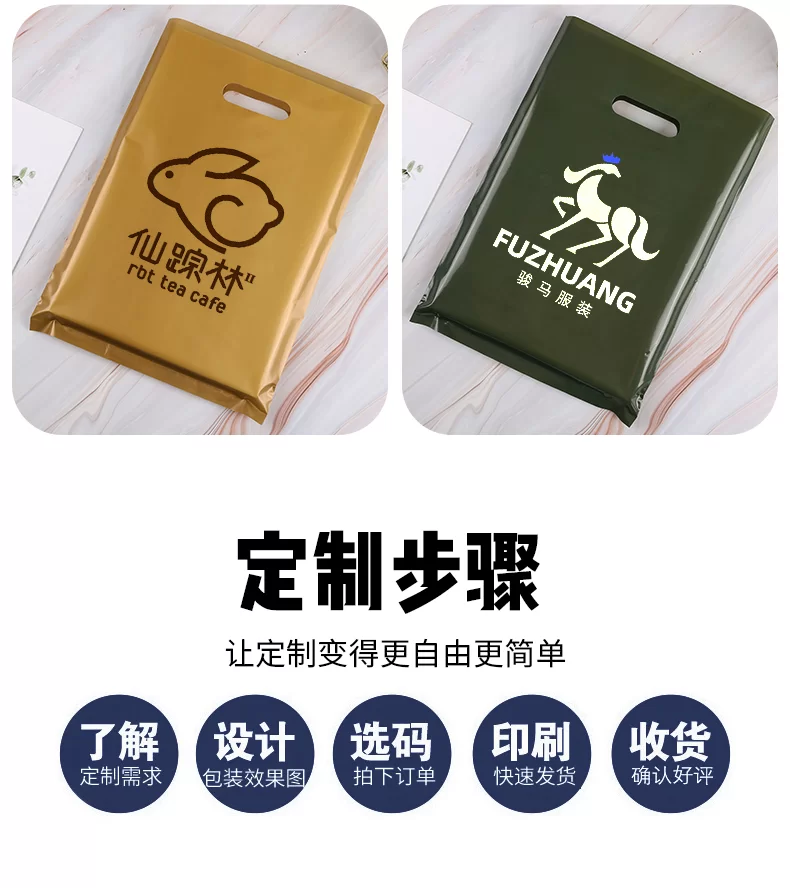
2. 【 Customizable services, creating exclusive 】
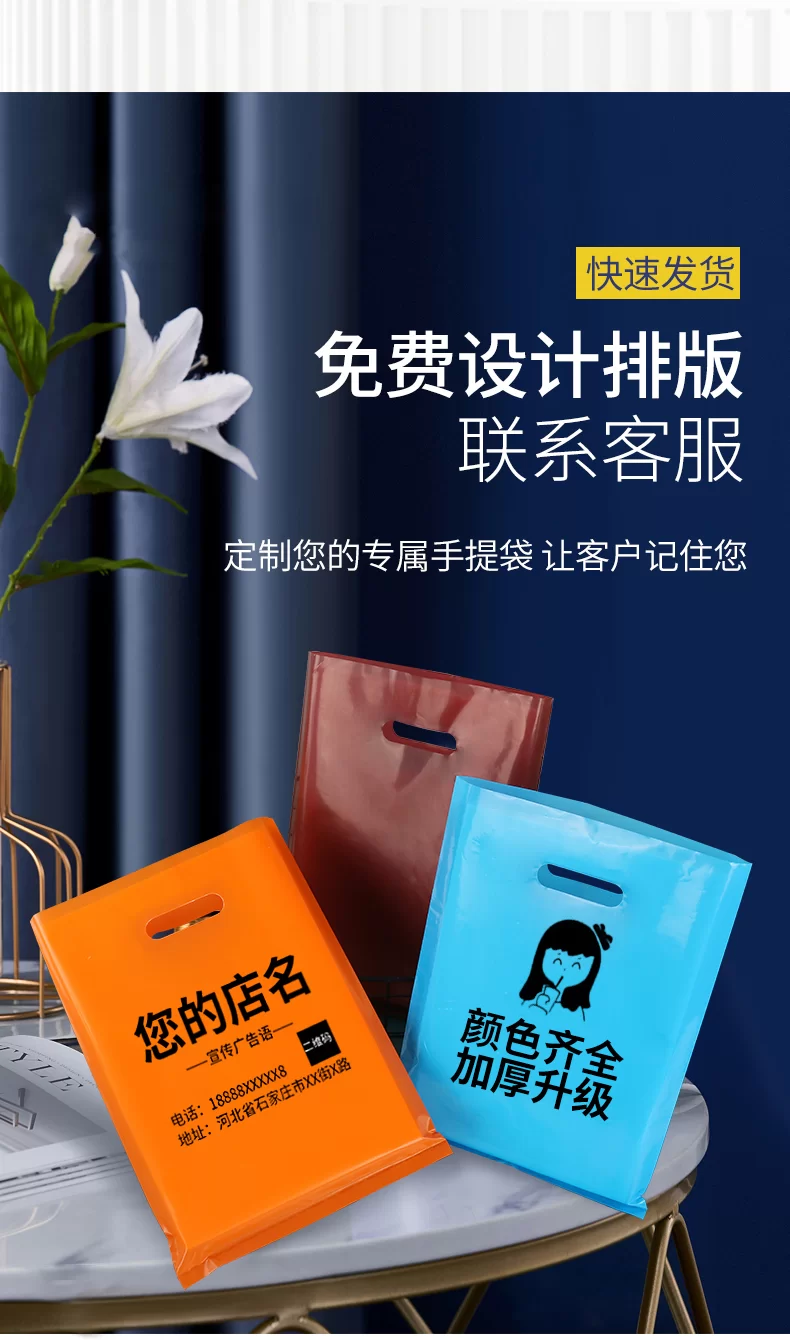
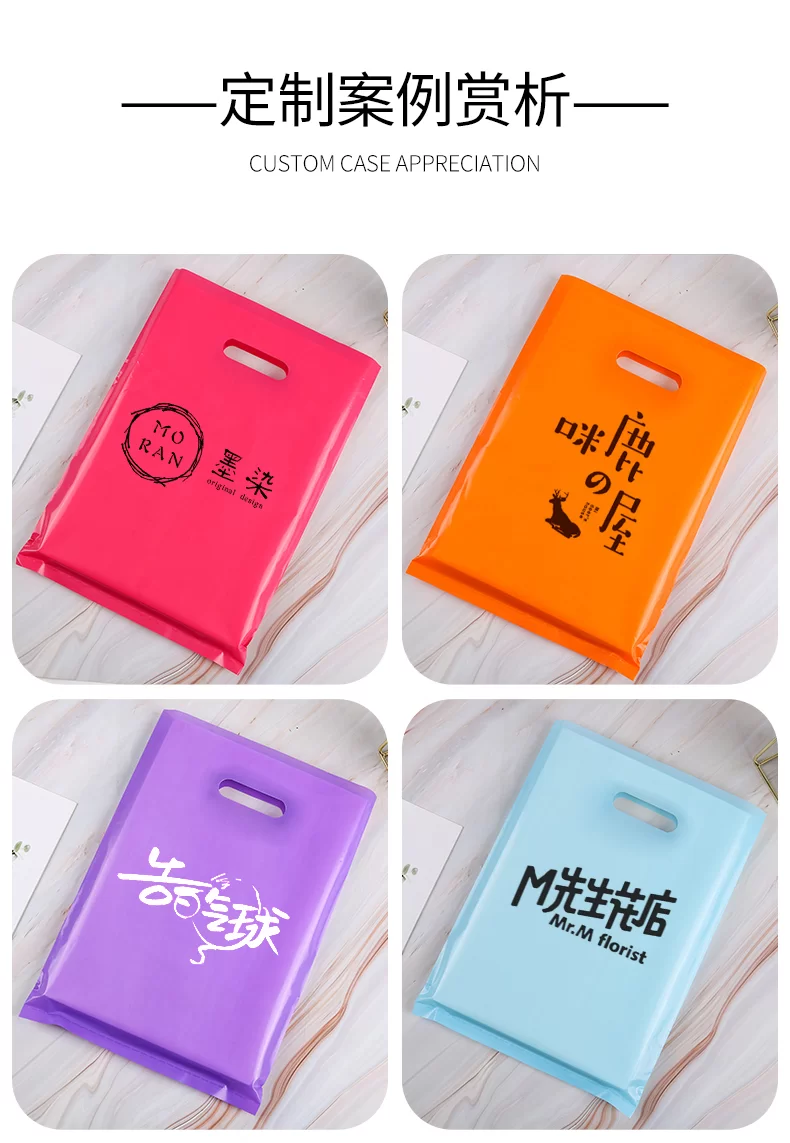
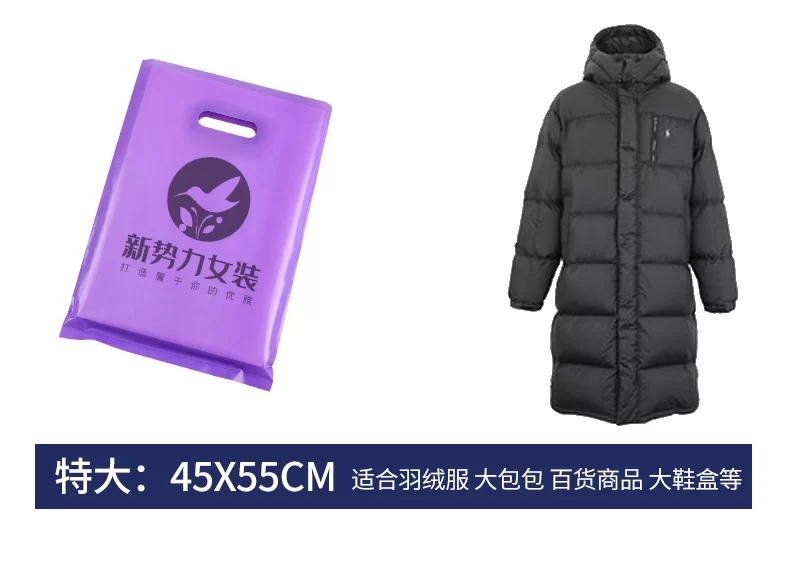
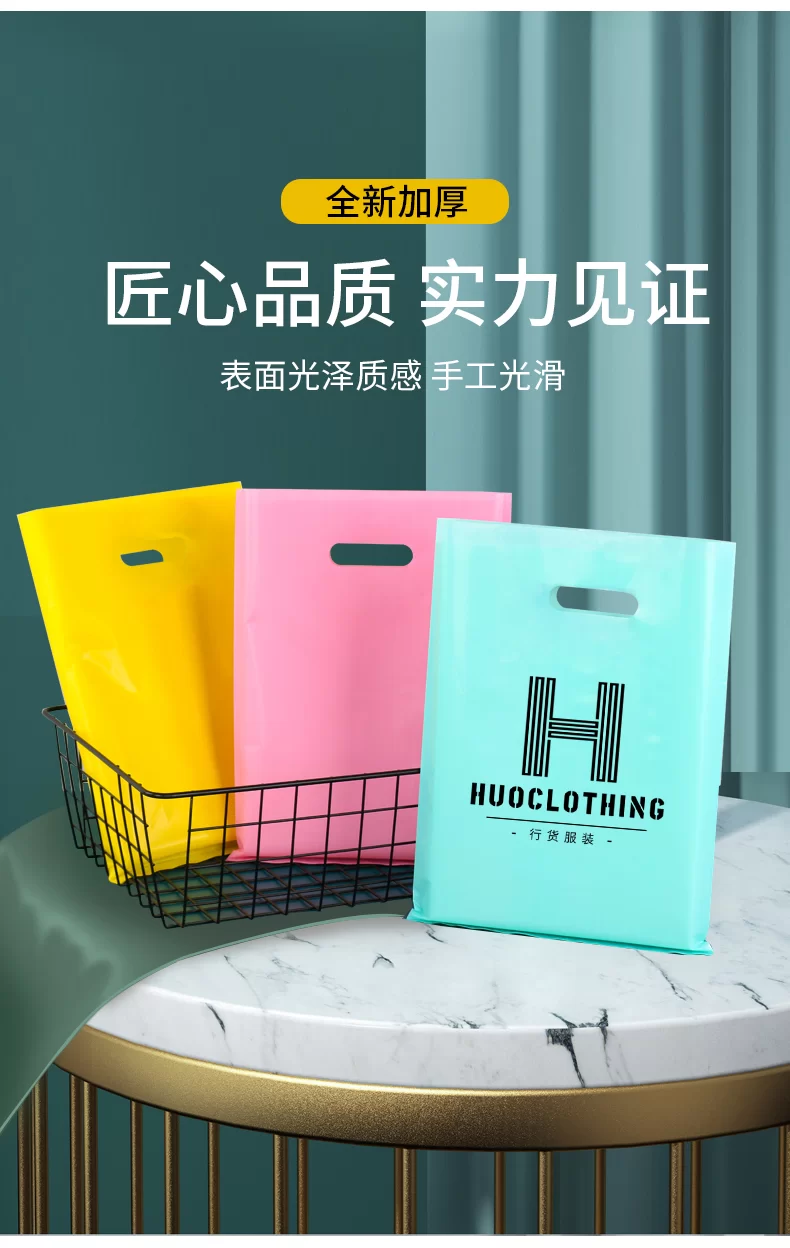
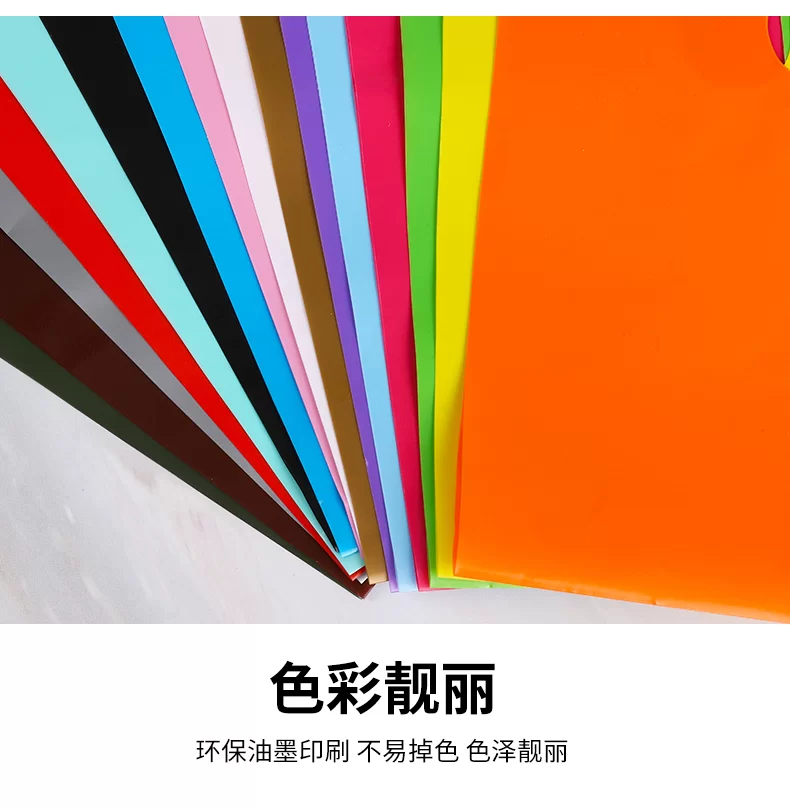
Free design, clear printing: supports gravure/flexographic printing, can print logos, QR codes, store information, bright and firm colors, and does not fade. Flexible minimum order: Small quantities (such as 200 pieces) can be customized, supporting spot wholesale and on-demand customization.
3. Multi scenario universal use
① Retail industry: Packaging products for clothing stores, beauty stores, gift stores, and milk tea shops to enhance brand image.
② Event Promotion: As an advertising bag, printing event information is a mobile promotional medium.
Different Types of Plastic Four Finger Bags
A plastic four finger bag is a type of plastic bag commonly used in supermarkets, retail stores, and small businesses. It is named for its unique handle design, where the top of the bag has two cut-out handles that resemble four fingers when held—two on each side. These bags are lightweight, flexible, and convenient for carrying groceries, clothing, or small retail items. There are several different types of plastic four finger bags based on material, thickness, and design:
High-Density Polyethylene (HDPE) Four Finger Bags
HDPE four finger bags are strong, durable, and resistant to tearing, making them ideal for carrying heavier groceries or multiple items. They are usually semi-transparent or slightly opaque and are widely used in supermarkets and convenience stores. HDPE bags are cost-effective and often used as single-use bags.
Low-Density Polyethylene (LDPE) Four Finger Bags
LDPE four finger bags are softer and more flexible than HDPE. They can stretch slightly, which reduces the chance of tearing when carrying irregular or bulky items. LDPE bags have a smooth, glossy surface and are often used in retail shops for packaging clothing, small electronics, or takeaway food.
Printed Four Finger Bags
These bags are customized with logos, brand names, or promotional messages. Printed four finger bags are commonly used for marketing purposes while also serving as practical carrying solutions. Businesses often use them during promotional events, gift packaging, or retail sales to enhance brand visibility.
Reinforced or Extra-Thick Four Finger Bags
Some four finger bags are made with extra-thick plastic or reinforced handles to carry heavier or bulkier items. These are ideal for bulk grocery shopping or industrial use, where durability and strength are essential.
Eco-Friendly or Biodegradable Four Finger Bags
With increasing environmental awareness, many manufacturers produce biodegradable or recyclable four finger bags made from compostable plastics. These bags maintain the same handle design and convenience but reduce environmental impact compared to traditional plastic bags.
In summary, plastic four finger bags come in different materials, thicknesses, and printing options. They are widely used in retail, supermarkets, and businesses due to their convenience, strength, and ability to be customized for branding or promotional purposes.
What Is a Plastic Four Finger Bag?
A plastic four finger bag is a type of plastic shopping or packaging bag widely used in supermarkets, retail stores, and small businesses. It is named for its distinct handle design, where the cut-out handles create four “finger” sections when held, providing an easy and comfortable grip. This design makes it practical for carrying groceries, clothing, and other retail items.
Plastic four finger bags are typically made from polyethylene (PE), either high-density (HDPE) or low-density (LDPE). HDPE bags are strong and tear-resistant, ideal for carrying heavier items, while LDPE bags are softer and more flexible, suitable for delicate or irregularly shaped products. The bags are lightweight, cost-effective, and easy to produce, which is why they are widely adopted in retail environments.
The main purpose of a plastic four finger bag is convenience and functionality. The unique handle design allows users to carry multiple items comfortably without straining their hands. These bags are also versatile—they can be used as grocery bags, clothing bags, takeaway food bags, or promotional packaging. Many retail stores also customize four finger bags with logos, brand names, or promotional designs, turning them into marketing tools in addition to functional carriers.
Plastic four finger bags are often disposable, but some thicker or reinforced versions are reusable. Eco-friendly versions made from biodegradable or recyclable plastics are also becoming popular due to environmental concerns.
In short, a plastic four finger bag is a durable, lightweight, and convenient plastic bag with a handle design shaped like four fingers, widely used for retail shopping, packaging, and brand promotion. Its combination of practicality, affordability, and versatility makes it a standard choice for many businesses and households.
How to Make a Plastic Four Finger Bag
Making a plastic four finger bag involves several steps, from selecting the right material to cutting and shaping the handles. These bags are commonly used in supermarkets, retail stores, and promotional events because of their convenient handle design and durability. Here’s a step-by-step overview of how they are made:
Material Selection
Plastic four finger bags are typically made from polyethylene (PE), either high-density (HDPE) for stronger, tear-resistant bags, or low-density (LDPE) for softer, more flexible bags. The choice of material depends on the intended use of the bag and the desired thickness. The plastic is usually supplied in rolls or sheets for processing.
Extrusion of Plastic Film
The raw polyethylene material is first melted and processed through an extrusion machine to form a thin plastic film. The film is then cooled and rolled into large rolls, which will serve as the base material for the bags. During this process, the thickness and clarity of the film are controlled to meet quality standards.
Printing (Optional)
If the bags are to be customized with logos, brand names, or designs, printing is done at this stage using flexographic or gravure printing methods. This step allows businesses to create branded four finger bags for marketing purposes.
Bag Cutting and Sealing
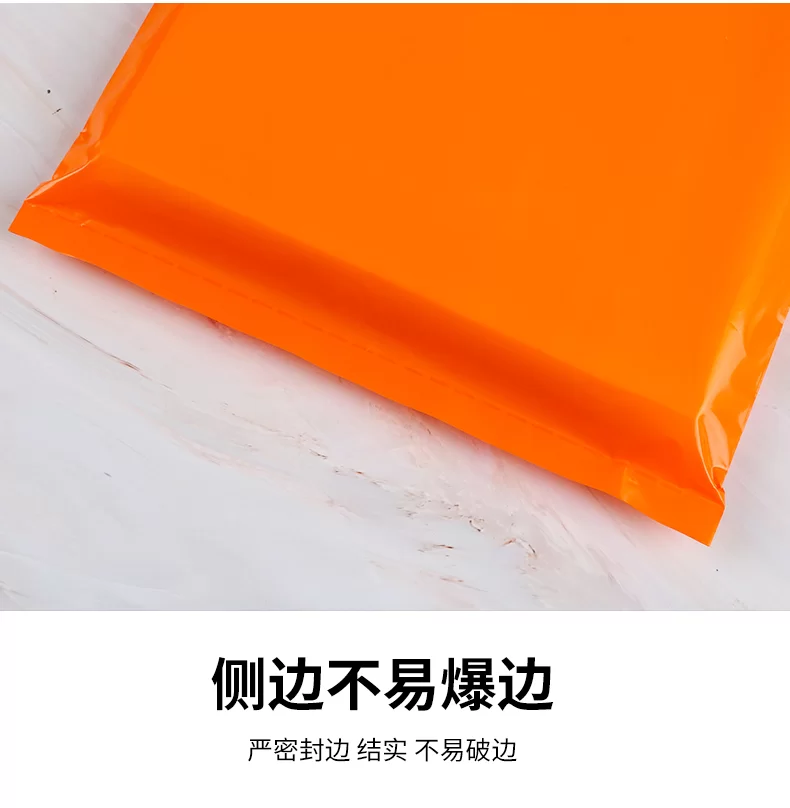
The plastic film is cut to the desired width and length for the bag. The sides of the bag are sealed using heat sealing machines, which create strong, durable seams. The bottom of the bag is also sealed to form the main compartment for carrying items.
Handle Formation
The distinctive “four finger” handles are created by cutting the top of the bag into two cut-outs on each side. These cut-outs resemble the shape of four fingers when the bag is held. Some machines can cut and seal handles automatically, while others may require manual adjustment for precise shapes.
Quality Control and Packaging
Finally, the finished four finger bags are inspected for defects, such as holes or weak seams. They are then counted, stacked, and packed for shipment to retailers, supermarkets, or promotional distributors.
In summary, making a plastic four finger bag involves material extrusion, optional printing, cutting, sealing, and handle formation. This process ensures that the bags are durable, functional, and ready for retail or promotional use.
-
-
May 18, 2026
-
May 15, 2026
-
May 13, 2026
-
May 11, 2026


